All-on-X implants
in Turlock, CA
Discuss a full-arch approach in which the number and position of implants are selected through clinical planning.
On this page
A full-arch plan based on clinical needs
All-on-X is a broad description for a full-arch restoration supported by a planned number of implants. The number, placement and restoration design are selected through assessment rather than assumed from a website description.
Ask how your plan is selected
Discuss the findings that influence your proposed approach and how it compares with fixed or removable alternatives. A clear consultation should explain the reasoning behind the plan.
Questions to bring
to your consultation
Understand the whole plan.
Treatment should be discussed in terms of suitability, alternatives and practical commitments.
Suitability & alternatives
Clinical assessment determines whether this approach is suitable. Ask about reasonable alternatives, relevant risks and limitations.
Stages & timing
Discuss examination, preparatory care, healing, restoration and follow-up. The sequence is individual; same-day completion is not assumed.
Costs & maintenance
Request a written estimate and clarify what is included. Discuss cleaning, checkups and possible ongoing maintenance costs.
Implant care
in Turlock.
All appointments shown here take place at 2101 Geer Rd, Suite 103, Turlock, CA 95382. For Manteca office information, see Manteca Dentistry And Implants. Confirm your appointment location with the practice.
Directions and office informationHow do I know which implant option to discuss?
A consultation is the place to start. The doctor will assess your oral health, understand your goals and discuss suitable options and alternatives. This website cannot determine clinical suitability.
What will my treatment cost?
Costs depend on the proposed treatment, any preparatory procedures, the restoration and ongoing care. Ask for a written estimate that explains inclusions and exclusions. Contact the office for current fees and available payment arrangements.
Will my treatment be completed in one day?
Treatment timing varies. Some plans may involve temporary restorations before final teeth. Do not assume that surgery, healing and a final restoration will all occur in one appointment; discuss the stages with the doctor.
A conversation can be
a confident first step.
Explore implant options with our Turlock practice.
All-on-X: three practical questions
Use these three questions about All-on-X to prepare for a clearer conversation with the practice. Open each topic to explore the practical details, then note the points you want to discuss in person.
01What does the proposed implant number explain?+
All-on-X describes a full-arch approach in which the number and arrangement of supports are selected through planning. Ask how the examination findings relate to the proposed supports and replacement teeth. The letter X is not a promise that every patient can choose a particular number or a predetermined procedure. Discuss the reasoning, alternatives and information needed for an individual recommendation.
02What should the complete written plan include?+
Ask which arch is involved, whether the proposed restoration is fixed or removable and how temporary and final stages are described. Confirm assessment, preparation, reviews and the ongoing cleaning routine alongside the estimate. All-on-X is a starting label for discussion; the written description should explain the scope of care, the limitations and the responsibilities that continue afterward.
03What should you understand before deciding?+
Bring your questions about All-on-X to a personal consultation and ask for a written description of the proposed scope. Discuss the reasonable alternatives, limitations and practical commitments that relate to your examination. Confirm who provides each stage and whom to contact between appointments. Ask how the practice explains daily care and arranges professional reviews. The treatment decision should be based on your own clinical assessment and an understandable explanation of the complete plan, including the estimate and ongoing responsibilities.
For general background, read the American Dental Association implant overview and the FDA patient guide to implants. Bring questions about benefits, risks and suitability to your dentist. These resources provide general information rather than an individual treatment recommendation.
All-on-X: understand the complete proposal
This guide to All-on-X explores the topics that matter to your decision. Each section gives you practical questions to discuss with the treating team, alongside the three starting questions above.
01Ask what the X means in your own proposal+
All-on-X is a broad label used in full-arch implant discussions. Ask the clinician what number and arrangement of supports are being considered in your particular proposal and why. The letter X does not replace an explanation of the clinical findings, the intended replacement teeth or the care required afterward.
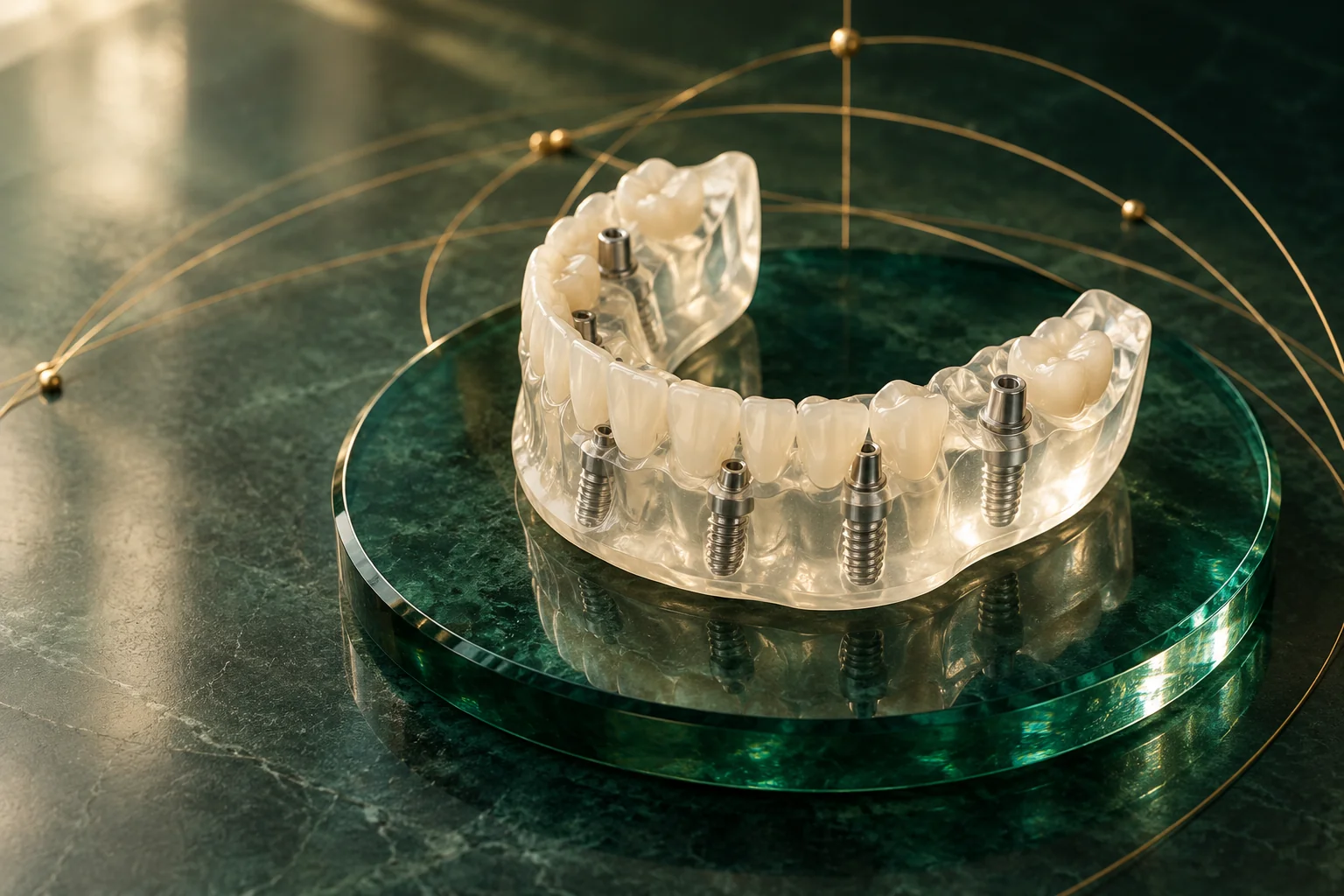
Begin with the scope. Confirm whether the discussion concerns your upper arch, lower arch or both, and which existing teeth or restoration are included in the assessment. Ask the dentist to distinguish the supports, connections and visible teeth in the proposed design. You can use a diagram to organize those questions without treating the diagram as your treatment plan.
When evaluating All-on-X, ask what information is still needed before the design can be confirmed. Explain your priorities and practical needs, including any difficulty with your current denture or cleaning routine. The consultation should help you understand the options relevant to your findings. You do not need to choose a particular number of implants before the clinician has explained the reasons behind the proposal.
02Keep the restoration in view when comparing support numbers+
Two All-on-X proposals can differ in more than the number of supporting implants. Ask each clinician to describe the intended restoration, the arch replaced, the appointment stages and the ongoing care expected. A comparison that lists only support numbers can leave important questions unanswered.
Ask whether the final teeth are intended to remain in place between professional visits or be removed by you for daily care. Confirm the materials and components actually proposed, rather than assuming they match a photograph or advertising example. If an alternative is recommended, request the reasons in relation to your examination and the practical limitations you should consider.
Put the descriptions side by side with the estimates. Check whether both include assessment, any preparatory care, interim teeth, the final restoration and reviews. An All-on-X label does not guarantee that two prices cover the same treatment. Ask for clarification of any undefined item before interpreting a difference in cost or choosing a payment arrangement. The comparison should leave you with a clear understanding of the complete options, not simply a preferred number.
03Map the decisions between assessment and final teeth+
Ask the team to outline the proposed All-on-X sequence in stages you can recognize. Which assessment findings need to be confirmed? Is preparation being considered? What would you use between placement and the intended final restoration? Which appointments are provisional and which are confirmed? Write down those answers in the order they would occur.
If interim teeth are discussed, ask how they differ from the proposed final design and which instructions apply at that stage. Confirm what reviews are planned before the next decision. A general treatment-day description cannot show the complete sequence for every patient. Your written proposal should identify the stages and the points at which the plan will be reassessed.
Explain the practical commitments that affect your availability. Ask how a change in findings or timing would be communicated and whether the estimate would be revised. All-on-X planning should make uncertainty understandable before you arrange transport, time away or major expenses. Keep copies of updates so that your appointment plan and financial information continue to refer to the same current proposal.
04Connect appearance preferences with a workable routine+
Describe what matters to you about the proposed All-on-X restoration. You may want to ask about the appearance of the teeth, how design feedback is gathered, speech questions or the feel of an existing denture. Ask which opportunities there are to discuss those concerns before the final stage.
Include cleaning access in that conversation. Ask the team to demonstrate the routine for the design being considered and explain which components you would handle yourself. If you have difficulty with small tools or visibility, mention it early. A design discussion is more useful when it includes the ordinary activities you would perform at home, rather than appearance alone.
Ask how the team reviews concerns after delivery and who provides advice if something changes. Clarify whether adjustments or review appointments are included in the proposed scope. All-on-X should be understood as an individual restoration with continuing care needs. The treatment label cannot promise a particular experience, and the written plan should help you understand how the proposed design, daily routine and access to professional care fit together.
05Identify who is responsible for each stage+
Before choosing All-on-X, ask who carries out assessment, any preparation, implant placement and the restorative appointments. If care involves more than one clinician, request an explanation of how they coordinate the plan and whom you should contact between visits. Clear responsibility is useful when you need a record, an appointment change or an explanation of a component.
Ask what information you should keep about the supporting system and final restoration. Discuss future professional maintenance, possible repairs and the terms of any written warranty actually offered. General statements about strength or durability do not describe the exact service arrangements in your proposal. Request the details that apply to your care and keep them with the estimate.
Include the cost and location of follow-up in your decision about All-on-X. If you expect difficulty returning for appointments, tell the practice before treatment is arranged. Ask what options exist for obtaining records or coordinating future care. A complete proposal should explain the clinical scope and the practical route for continuing support, rather than leave you to work out those arrangements after the initial stages.
06All-on-X: a worksheet for comparing written proposals+
Make a simple comparison sheet before deciding between All-on-X proposals. Give each option its own column and record the date, office, clinician and exact area of the mouth covered. Under the first heading, describe the replacement teeth in ordinary words. Under the next heading, list the proposed stages. Leave a separate space for items that remain undecided. This makes uncertainty visible instead of allowing an early estimate to look like a completed agreement.
Copy the quoted total into the worksheet, then record what that total includes. Ask about examination and records, preparation if proposed, implant components, interim teeth, the final restoration and professional reviews. Do not assume that a blank line means an item is included or unnecessary. Mark it as a question for the practice. Keep any revised estimate with its date so that you can identify which version is current.
Add a final row for the responsibilities that continue after delivery. Ask about cleaning demonstrations, review arrangements, possible adjustments and whom to contact with a concern. Comparing the complete proposal gives you more useful information than comparing a monthly payment alone. The worksheet is a way to organize a conversation, not a way to judge clinical suitability without an examination.
07All-on-X: make the appointment plan practical for your life+
Before arranging All-on-X, write down the commitments that affect your ability to attend appointments. These could include work shifts, caring for someone else, travel from another city, mobility needs, language preferences or the availability of a companion. Share the relevant practical details with the team and ask which arrangements need to be made before the appointment is confirmed.
Separate your consultation arrangements from any later treatment instructions. Confirm the consultation fee, office address, arrival time and records requested by the practice. If a procedure is subsequently planned, obtain its preparation instructions directly from the treating team. Ask whether a driver or companion is required for the particular arrangements being proposed. General website information cannot decide that for you, and a callback request does not reserve a treatment appointment.
Keep a short contact sheet with the office number, the appointment date and the name of the person who confirmed it. Ask how questions are handled between visits and what to do if your circumstances change. If you are coordinating travel, distinguish a provisional timetable from confirmed appointments. This helps you avoid buying tickets or taking time away from work on the assumption that every stage will happen on one date.
08All-on-X: organize records and follow-up questions+
Create one folder for the information you receive while planning All-on-X. Useful items can include the written proposal, estimate, appointment instructions, consent information and the contact details supplied by the practice. If the dentist gives you implant system or component information, keep it with your dental records. Ask the team which documents are relevant to future reviews and how copies can be requested.
After a consultation, divide your remaining questions into three groups: the clinical explanation, the practical arrangements and payment. This makes it easier to direct each question to the appropriate person. Ask the clinician to clarify the proposed treatment and alternatives. Ask the office to confirm scheduling and fees. If a separate financing provider is involved, request its actual agreement and direct questions about that agreement to the provider.
Use the practice’s recommended method for sharing private records. The public callback form is intended for contact details, not medical documents or a detailed health history. You can ask for a secure sharing method before sending information. A good next step is one you understand: what has been proposed, what remains uncertain, what you are agreeing to and how to obtain clarification. Taking a question list back to the office is a reasonable part of making that decision.
09All-on-X: your consultation worksheet+
Make a planning sheet with four headings: scope, design, stages and continuing care. Under scope, identify the arch or arches included. Under design, record the supporting arrangement and intended replacement teeth as the clinician describes them. If a detail is still provisional, write that explicitly instead of filling the gap with information from a different All-on-X advertisement.
Under stages, list assessment, any preparation, interim arrangements, reviews and the proposed final restoration in the order discussed. Ask which decisions depend on further findings. Under continuing care, note the cleaning demonstration you will need, the review arrangements and the information the practice recommends retaining. This connects the technical proposal with what you would actually do before, between and after appointments.
If you are comparing another proposal, use the same four headings in a separate column. Put each estimate alongside its own treatment description. Check that a lower or higher figure is not being interpreted without considering differences in scope, materials, stages or service arrangements. A financing illustration should be reviewed with the provider’s written terms as well as the treatment estimate.
Finish by listing the questions that prevent you from understanding the next step. Ask the appropriate clinician or office contact to explain them and update the written proposal if needed. The purpose of the sheet is clarity, not a scorecard that selects an implant number or diagnoses your needs. An examination and discussion with the treating team remain necessary to decide what care may be appropriate.
For independent background, read the American College of Prosthodontists implant questions. Use this All-on-X guide to organize your discussion; an individual examination is needed before treatment is recommended.