Conventional removable denture
A conventional denture rests on the gums rather than connecting to implants. Ask the dentist to assess its fit and explain whether adjustments, a replacement denture or implant treatment is relevant.
Understand removable implant dentures in Turlock: how snap-on attachments work, how they differ from fixed teeth, and what to discuss about cleaning, maintenance and your treatment estimate.
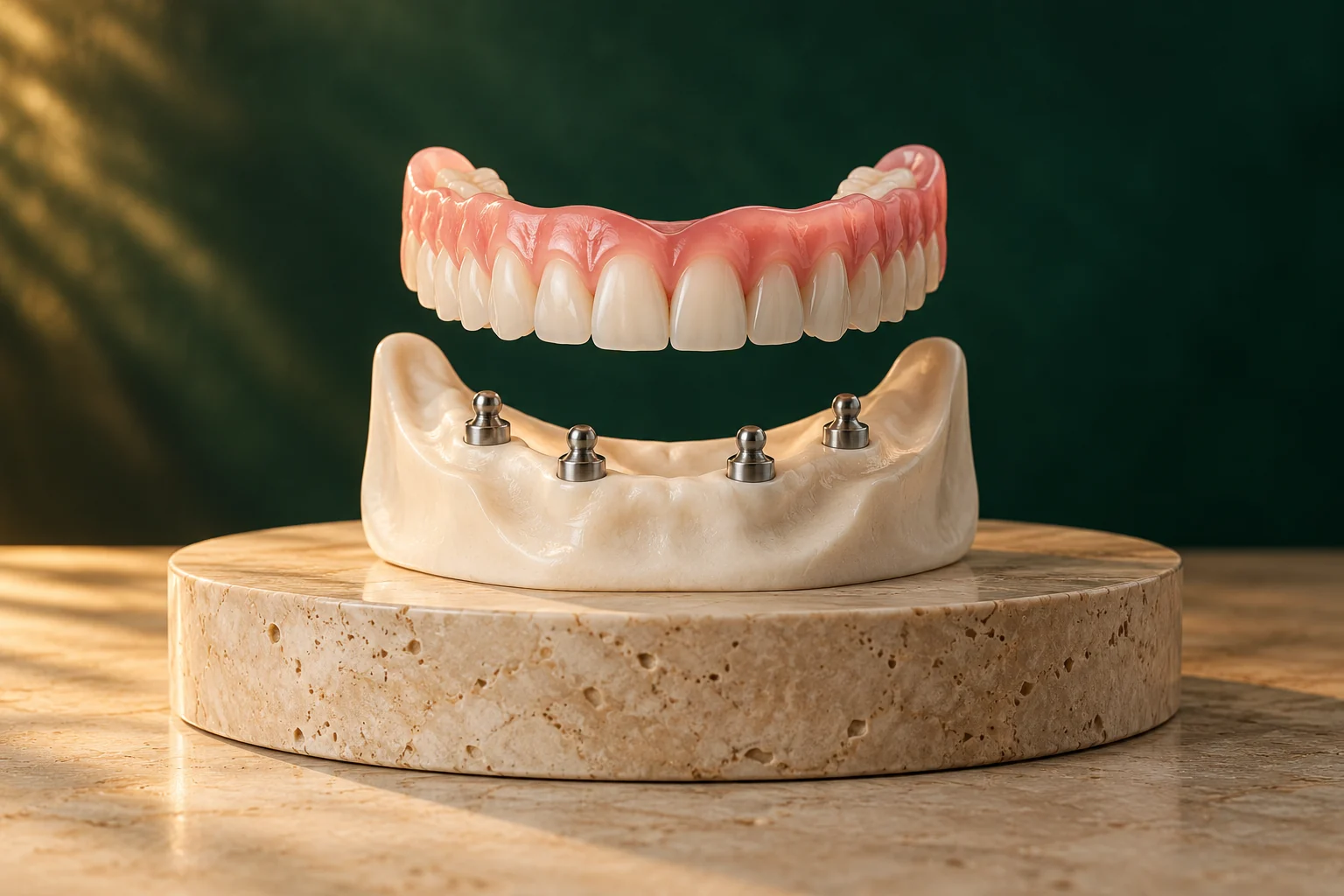
A snap-on denture is a removable replacement that connects to implant attachments. The implants remain in the jaw while you remove the denture for cleaning. Compared with a conventional denture resting on the gums, the attachments provide additional retention. The proposed design determines how the denture is supported.
The term implant denture can describe different designs. This page focuses on removable snap-on teeth, also called implant-retained overdentures. A fixed full-arch restoration has a different removal and cleaning routine. Discuss your preferences and ability to handle the denture when comparing them.
The sequence depends on your examination. Ask which steps are included and what needs to be confirmed before each stage.
Tell the dentist about movement, chewing, fit and any difficulty handling your current denture. The gums, bone and health history need assessment before an attachment design is proposed. The implant candidacy guide explains useful consultation topics.
Ask which arch is treated, where implants are proposed and what you would wear during healing. Preparation and timing vary with the clinical plan. Review the implant treatment stages before arranging travel or time away from work.
At the restoration stage, ask the team to demonstrate insertion, removal and cleaning. Confirm how fit and attachment retention will be reviewed. Ask whether the proposed restoration and attachment components may need servicing or replacement.
The way replacement teeth attach affects everyday care. Discuss the design, cleaning access, handling and professional maintenance alongside the initial treatment.
A conventional denture rests on the gums rather than connecting to implants. Ask the dentist to assess its fit and explain whether adjustments, a replacement denture or implant treatment is relevant.
You remove the denture to clean it and the implant attachments. Ask how to handle the proposed design, what maintenance is expected and whom to contact if retention changes.
A fixed full-arch implant restoration stays in place for daily use. You need to clean around and beneath it; a clinician manages removal when necessary. Use our implant options comparison to prepare your questions.
Ask whether your estimate covers implant placement, attachments, a new denture or modifications to an existing one, any interim replacement and follow-up. Keep future attachment servicing, repairs or denture replacement separate from the initial quote. Our cost and estimate guide explains the questions to ask; financing and insurance information covers payment discussions.
Learn the removal and cleaning method for your particular denture and attachments. Tell the team if handling is difficult so they can discuss the routine with you. Continue professional reviews even when the denture feels comfortable. If it starts moving differently, arrange an assessment rather than adjusting an attachment yourself. See the implant maintenance guide for further planning topics.
General patient information: Cleveland Clinic implant-supported denture guide and American College of Prosthodontists implant questions. Your examination determines suitability, benefits, risks and the recommended plan.
All appointments shown here take place at 2101 Geer Rd, Suite 103, Turlock, CA 95382. For Manteca office information, see Manteca Dentistry And Implants. Confirm your appointment location with the practice.
Directions and office informationNo. The denture is designed to be removed by you for cleaning. The implants stay in the jaw. A fixed full-arch restoration is a different design and needs a different cleaning routine.
Sometimes modification may be considered, but it is not automatic. Bring the denture to your consultation so the dentist can assess its condition, fit and compatibility with the proposed plan. Ask whether the estimate assumes a new denture.
Attachment systems and dentures may need servicing, adjustment or replacement over time. Ask what reviews are recommended, which components may wear, and how maintenance is priced. Your own design and condition determine the appropriate care.
Explore implant options with our Turlock practice.