Bone grafting
in Turlock, CA
Learn why supporting bone may be assessed and when grafting may be discussed as part of implant care.
On this page
Supporting bone is part of the assessment
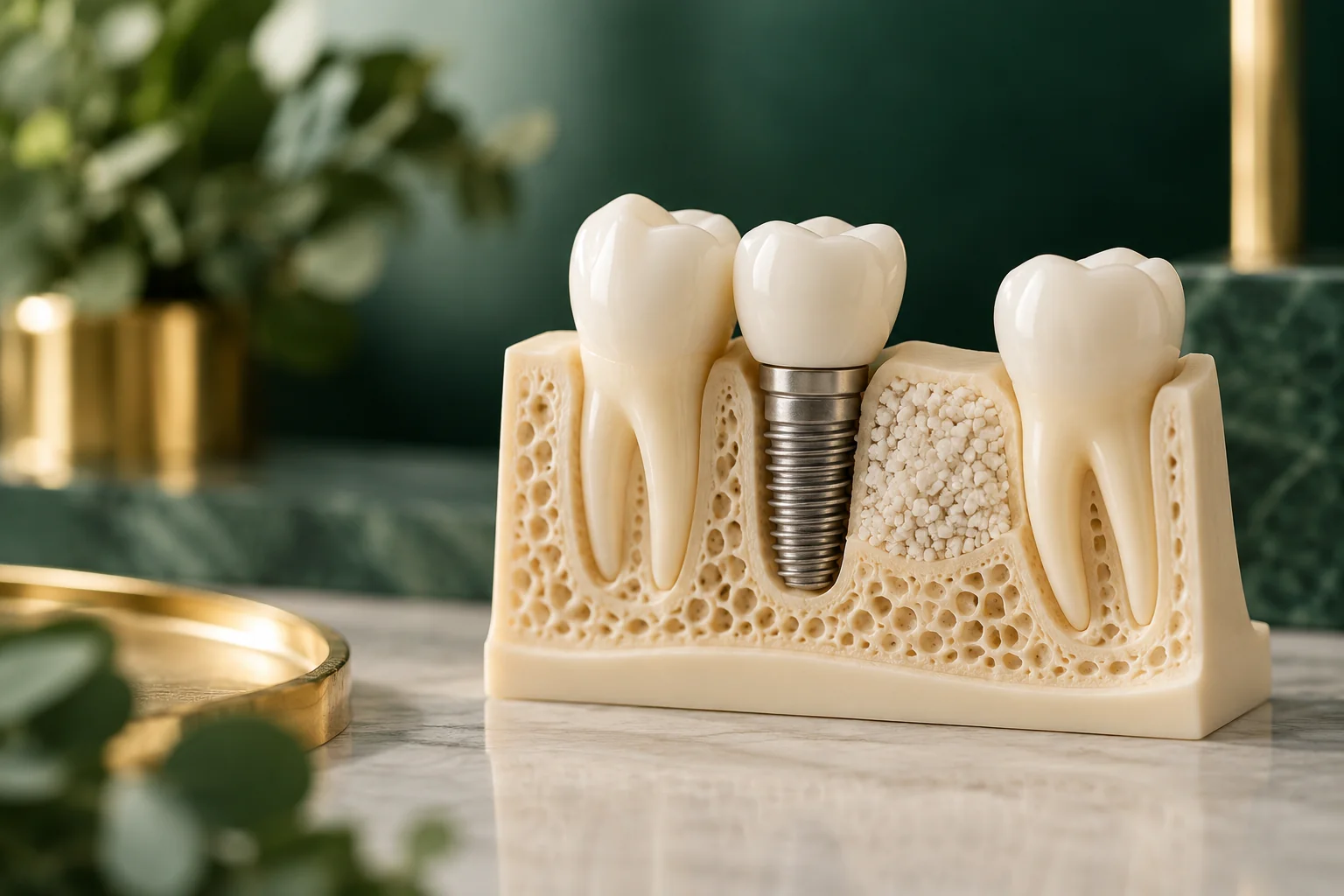
Bone grafting may be discussed when the supporting bone requires attention as part of an implant plan. It is not necessary for every patient, and the type, timing and alternatives depend on clinical findings.
Ask where it fits in your treatment
If grafting is recommended, discuss why, how it affects the stages of care and what alternatives may exist. The doctor should explain the benefits, limitations, risks and follow-up relevant to your circumstances.
Questions to bring
to your consultation
Understand the whole plan.
Treatment should be discussed in terms of suitability, alternatives and practical commitments.
Suitability & alternatives
Clinical assessment determines whether this approach is suitable. Ask about reasonable alternatives, relevant risks and limitations.
Stages & timing
Discuss examination, preparatory care, healing, restoration and follow-up. The sequence is individual; same-day completion is not assumed.
Costs & maintenance
Request a written estimate and clarify what is included. Discuss cleaning, checkups and possible ongoing maintenance costs.
Implant care
in Turlock.
All appointments shown here take place at 2101 Geer Rd, Suite 103, Turlock, CA 95382. For Manteca office information, see Manteca Dentistry And Implants. Confirm your appointment location with the practice.
Directions and office informationHow do I know which implant option to discuss?
A consultation is the place to start. The doctor will assess your oral health, understand your goals and discuss suitable options and alternatives. This website cannot determine clinical suitability.
What will my treatment cost?
Costs depend on the proposed treatment, any preparatory procedures, the restoration and ongoing care. Ask for a written estimate that explains inclusions and exclusions. Contact the office for current fees and available payment arrangements.
Will my treatment be completed in one day?
Treatment timing varies. Some plans may involve temporary restorations before final teeth. Do not assume that surgery, healing and a final restoration will all occur in one appointment; discuss the stages with the doctor.
A conversation can be
a confident first step.
Explore implant options with our Turlock practice.
Bone grafting: three practical questions
Use these three questions about bone grafting to prepare for a clearer conversation with the practice. Open each topic to explore the practical details, then note the points you want to discuss in person.
01What is preparatory care intended to address?+
Ask the dentist to explain the findings that led to a bone grafting discussion and what information is still needed. Discuss how the proposed preparation relates to your replacement teeth plan. The presence of bone loss in a general description does not establish what an individual person needs. A clinical explanation should cover the proposed purpose, alternatives, limitations and the sequence being considered.
02How would preparation affect practical planning?+
Ask which appointments, review stages and costs would belong to preparatory care and which belong to implant or restoration stages. Discuss how the team evaluates readiness for the next step and how any changes would be explained. Bone grafting questions should be answered in the context of your own examination, including the instructions and professional reviews that the clinician recommends.
03What should you understand before deciding?+
Bring your questions about Bone grafting to a personal consultation and ask for a written description of the proposed scope. Discuss the reasonable alternatives, limitations and practical commitments that relate to your examination. Confirm who provides each stage and whom to contact between appointments. Ask how the practice explains daily care and arranges professional reviews. The treatment decision should be based on your own clinical assessment and an understandable explanation of the complete plan, including the estimate and ongoing responsibilities.
For general background, read the American Dental Association implant overview and the FDA patient guide to implants. Bring questions about benefits, risks and suitability to your dentist. These resources provide general information rather than an individual treatment recommendation.
Bone grafting: understand the complete proposal
This guide to bone grafting explores the topics that matter to your decision. Each section gives you practical questions to discuss with the treating team, alongside the three starting questions above.
01Ask what the proposed graft is intended to address+
Bone grafting can be discussed as part of preparation for a dental implant plan. Start by asking the clinician to identify the area being considered and explain the findings that led to the discussion. Request a clear description of the objective of the proposed procedure and the information still needed before a recommendation is confirmed.
Separate the preparation from the eventual replacement teeth. Ask whether the conversation concerns an extraction site, an area where a tooth has already been missing or another specific finding. The same broad treatment label can appear in different plans, so a generic illustration should not be read as a description of your procedure. Ask the dentist to connect the explanation to your examination and records.
When reviewing bone grafting, ask what reasonable alternatives should be considered and what each would mean for the wider implant proposal. You do not need to choose a technique from a website before the assessment. The consultation should help you understand why preparation is being proposed, what the limitations are and how the next decisions would be made for your individual situation.
02Understand the relationship between grafting and implant stages+
Ask how bone grafting would fit into the proposed treatment sequence. Is it being discussed as a separate stage or in connection with another procedure? Which findings determine that arrangement? Ask the clinician to outline the proposed order and identify the points at which progress would be reviewed before a later stage is considered.
Do not assume that every preparation procedure leads to the same implant date. Request an explanation of what remains uncertain and how the practice would communicate a change. Keep the written sequence alongside your estimate, so that an early discussion about preparation is not mistaken for a confirmed complete implant plan.
If appearance or an interim tooth matters during that period, raise the question before scheduling. Ask what you would use between stages and which individual instructions would apply. Planning bone grafting should include understanding the time between procedures as well as the procedures themselves. Confirm appointments directly with the team before organizing travel, work leave or other commitments around an estimated timetable.
03Discuss the proposed material without choosing it yourself+
If the clinician recommends bone grafting, ask what material or approach is being proposed and why it is being considered. Request an explanation in ordinary language, including which part of the plan the material belongs to. You can ask for the relevant written information without needing to arrive with a preferred product or technical term.
Tell the treating team about any concern you want addressed during the clinical discussion. Ask how your health information will be reviewed and which questions require further assessment. Use the practice’s recommended secure method for sharing records; the public callback form is intended for contact details. The appropriate proposal depends on your clinical situation rather than an online comparison of material names.
Ask which details of the procedure and materials will be included in your records. If you later request a copy of the treatment description, knowing how those records are organized can be helpful. Bone grafting should be explained as an individual proposal with potential benefits, limitations and risks, not as a product purchase determined by an attractive illustration or a short advertisement.
04Request individual preparation and recovery instructions+
Before planned bone grafting, ask the treating team which preparation instructions apply to the procedure you are actually having. Clarify the proposed comfort arrangements and any practical support you need afterward. If transport, a companion or changes to your routine are part of the instructions, confirm them directly with the clinician.
Ask for written directions about the recovery period and how to obtain clarification. Explain the work, caregiving or travel commitments that could make those arrangements difficult. A website cannot decide when you should change medicines, eat, clean the area or return to a particular activity. Those decisions belong with the treating team and the individualized instructions they provide.
Keep the office contact details with your appointment information. Ask how to report a concern and what to do if a question arises outside normal hours. Follow the professional advice given for your care rather than trying to interpret a photograph or another person’s experience. Planning bone grafting includes knowing how you will stay in touch and when the practice expects to review you, as well as understanding the proposed procedure.
05Review preparation costs within the wider treatment plan+
Ask whether the bone grafting estimate is separate from the implant and restoration proposal. Identify which assessment, procedure, materials and review appointments it covers. If later stages remain undecided, ask how they will be estimated and when you can expect an updated written description of the complete scope.
Compare proposals by their purpose and area of treatment, not only by the name of the procedure. Two estimates may concern different preparation needs or different relationships to the later implant stage. Ask the clinician to explain those differences before drawing conclusions from the figures. If insurance or financing is discussed, confirm the current terms with the relevant provider and keep those documents separate from the clinical recommendation.
Before deciding about bone grafting, review your questions about alternatives, sequence, recovery arrangements and follow-up. Request clarification of anything still provisional. The decision should be based on the assessment of your own mouth and an understandable explanation of the preparation being proposed, including how it relates to the later replacement teeth and what remains to be confirmed.
06Bone grafting: a worksheet for comparing written proposals+
Make a simple comparison sheet before deciding between bone grafting proposals. Give each option its own column and record the date, office, clinician and exact area of the mouth covered. Under the first heading, describe the replacement teeth in ordinary words. Under the next heading, list the proposed stages. Leave a separate space for items that remain undecided. This makes uncertainty visible instead of allowing an early estimate to look like a completed agreement.
Copy the quoted total into the worksheet, then record what that total includes. Ask about examination and records, preparation if proposed, implant components, interim teeth, the final restoration and professional reviews. Do not assume that a blank line means an item is included or unnecessary. Mark it as a question for the practice. Keep any revised estimate with its date so that you can identify which version is current.
Add a final row for the responsibilities that continue after delivery. Ask about cleaning demonstrations, review arrangements, possible adjustments and whom to contact with a concern. Comparing the complete proposal gives you more useful information than comparing a monthly payment alone. The worksheet is a way to organize a conversation, not a way to judge clinical suitability without an examination.
07Bone grafting: make the appointment plan practical for your life+
Before arranging bone grafting, write down the commitments that affect your ability to attend appointments. These could include work shifts, caring for someone else, travel from another city, mobility needs, language preferences or the availability of a companion. Share the relevant practical details with the team and ask which arrangements need to be made before the appointment is confirmed.
Separate your consultation arrangements from any later treatment instructions. Confirm the consultation fee, office address, arrival time and records requested by the practice. If a procedure is subsequently planned, obtain its preparation instructions directly from the treating team. Ask whether a driver or companion is required for the particular arrangements being proposed. General website information cannot decide that for you, and a callback request does not reserve a treatment appointment.
Keep a short contact sheet with the office number, the appointment date and the name of the person who confirmed it. Ask how questions are handled between visits and what to do if your circumstances change. If you are coordinating travel, distinguish a provisional timetable from confirmed appointments. This helps you avoid buying tickets or taking time away from work on the assumption that every stage will happen on one date.
08Bone grafting: organize records and follow-up questions+
Create one folder for the information you receive while planning bone grafting. Useful items can include the written proposal, estimate, appointment instructions, consent information and the contact details supplied by the practice. If the dentist gives you implant system or component information, keep it with your dental records. Ask the team which documents are relevant to future reviews and how copies can be requested.
After a consultation, divide your remaining questions into three groups: the clinical explanation, the practical arrangements and payment. This makes it easier to direct each question to the appropriate person. Ask the clinician to clarify the proposed treatment and alternatives. Ask the office to confirm scheduling and fees. If a separate financing provider is involved, request its actual agreement and direct questions about that agreement to the provider.
Use the practice’s recommended method for sharing private records. The public callback form is intended for contact details, not medical documents or a detailed health history. You can ask for a secure sharing method before sending information. A good next step is one you understand: what has been proposed, what remains uncertain, what you are agreeing to and how to obtain clarification. Taking a question list back to the office is a reasonable part of making that decision.
09Bone grafting: your consultation worksheet+
Use a planning sheet that keeps preparation and replacement separate. Under “preparation,” write the area being discussed, the objective explained by the clinician and any further assessment needed. Under “replacement,” note the implant and restoration stages that may follow if they are part of the proposal. Do not treat a discussion of bone grafting as confirmation of every later stage.
Add a sequence showing which appointments are proposed together and which are separate. Ask the clinician to identify the review points and the decisions that depend on progress. If an interim tooth or denture is relevant, record the arrangement actually being considered and the individual instructions you will need. Mark estimated timing clearly so it is not confused with a confirmed appointment.
Beside the sequence, list the costs included in the preparation estimate and any later costs that remain to be confirmed. Ask whether materials, reviews and any related procedure are described in the same document or separately. If another proposal is being compared, check that it concerns the same area and preparation objective before comparing totals.
Finish with your questions about alternatives, preparation instructions, recovery support and contact arrangements. Ask the treating team to review anything you have misunderstood. This sheet is an aid to an informed conversation, not a way to decide whether you need grafting or choose a material on your own. The next step should follow your individual clinical assessment and an understandable explanation of what is being proposed.
For independent background, read the American College of Prosthodontists implant questions. Use this bone grafting guide to organize your discussion; an individual examination is needed before treatment is recommended.